
Ready to give your Northern Beaches backyard a mini-makeover without breaking the bank? Picture this: you, sipping your morning flat white by a new rock-solid wall that holds back a sloping garden bed, not your wallet. Whether you’ve got a coastal slope or just want to define a flowerbed, DIY budget retaining wall ideas can turn a tricky grade into a stylish feature.
These options mix form and function: think rustic timber, stacked stone, and even wire cages full of rocks. We’ll walk you through 7 ideas, with the pros, cons and look of each, and which ones tend to cost less. Every site is different, so the only real price is a quote for your block.
1. Timber Sleeper Wall: Rustic Charm for Pennies
Nothing says “Aussie backyard” like a timber sleeper retaining wall. Treated pine sleepers (often H4-rated for in-ground use) are widely available, and they’re one of the most affordable wall materials.
Stack them horizontally between galvanized steel or timber posts to hold back soil, leaving a layer of crushed rock behind for drainage. The result is a warm, natural wood look that blends with greenery.
Pros: Very DIY-friendly (you just cut, stack and brace the wood), easy to get (local sawmill or Bunnings), and you can reuse or stain the wood any color.
Cons: Timber doesn’t last forever (maybe 10 to 15 years), it can rot or get termite-damaged if not H4-treated, so be sure to seal it or use stainless screws. Also, posts or brackets are recommended for anything over ~300mm high.

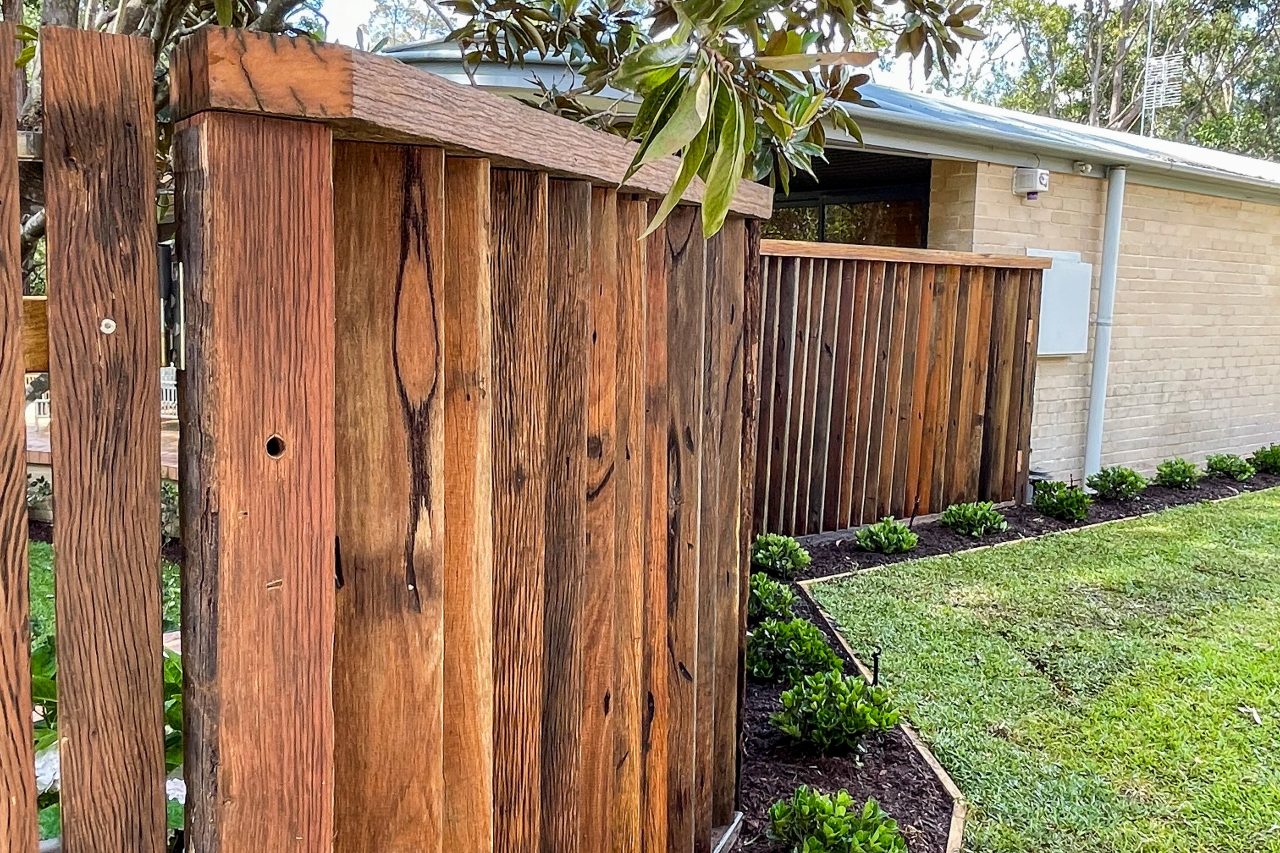
2. Vertical Sleeper Retaining Wall: Skinny, Sleek, and Sturdy
For a twist on the sleeper theme, stand those timbers up on end. Vertical railway sleepers (or tall treated timber posts) can be buried partway into the soil to hold back an embankment. This “post-and-plank” style looks extra rustic (imagine old railway ties lining your garden) and feels solid. They’re affordable and easy to source, recycled sleepers are often given away, or treated hardwood posts cost about the same as pine.
As one guide notes, “vertical railway sleepers make the perfect looking retaining wall” and are naturally good for garden slopes. Installation is straightforward: dig a trench or holes for each post (depth ≈ wall height), set the posts in concrete or gravel, then attach additional sleepers between them at desired height.
Cost: Similar to horizontal sleepers.
Aesthetic: Vertical lines add texture and height; over time they weather to a silvery grey.

3. Concrete Block Wall: Modern & Modular
Want instant strength? Go with concrete blocks or Besser blocks. These chunky grey blocks are heavy-duty and often cheaper than fully poured concrete, though they cost more than timber sleepers. The Spruce (a home-garden site) even calls a simple stack of blocks “the simplest retaining wall” you can DIY.
Just level the ground, lay a base of crushed rock, and stack blocks in a running bond. You can optionally glue or mortar them for extra strength. These walls are very durable and fireproof.
Pros: Rock-solid, low maintenance, and easy to make straight or curved. You can even leave the holes open for little planter pockets or run a “gabion effect” of plants.
Cons: Plain concrete blocks look industrial (though you can paint or face them with tiles). They’re also heavy, so handling might require a mate or a pulley.

4. Dry-Stack Stone Wall: Classic Elegance
Stacked stone walls give that classic rock-garden look. Think sandstone or limestone boulders (which in Sydney can sometimes be had as offcuts). Stone costs vary with the type and the amount you need, and natural stone can be more affordable than people expect. Big stones will support themselves, and irregular cuts fill gaps naturally, so no mortar is needed if each stone sits solid.
Pros: Utterly timeless look (stones blend beautifully with coastal gardens), extremely long-lasting, and each wall is unique.
Cons: Lifting heavy rocks is hard work without equipment. You must interlock stones carefully and include drainage behind the wall to avoid frost heave (even though we don’t frost here, heavy rain can shift dry-stack walls).
Lay the first course level and stagger joints like a brickwork pattern for stability.
| Material/Wall Type | Notes |
|---|---|
| Treated Pine Timber | Warm wood tone, easy to DIY |
| Concrete Blocks/Brick | Very durable, plain grey look |
| Stacked Sandstone | Rustic, high-end look |
| Cinder/Concrete Blocks | Cheap, heavy, industrial |
| Gabion (Wire Baskets) | Very sturdy, labour-intensive |

5. Gabion Basket Wall: Industrial Chic
Gabion walls are all the rage in modern landscaping, and they can be done on a budget if you do it yourself. A gabion is simply a steel wire cage filled with rocks or even recycled concrete. You’d typically need a compacted gravel footing, but for a small, short wall you can often lay cages on a level base.
Pros: You can often source stones cheaply (for example offcuts, river rocks or recycled pavers), then just shovel them into the cages. The cost is mainly in the baskets themselves and the labour. The result? A tough, drainage-friendly wall (water flows between the rocks) with a cool industrial look. One caveat: gabions are labour-intensive, because filling them takes time.
Aesthetic: You can highlight the stone’s color or let the wall partly get covered in creepers. Tip: tier the cages on a slight setback for stability, and include a piped drain behind.

6. Brick or Paver Wall: DIY Artisan Style
If you happen to have leftover bricks or pavers (common from patios or old projects), turn them into a wall! Even an off-cut pallet of garden bricks can make a short wall. Mortar them as usual or do a dry-stack brick wall for flowerbed edging. New bricks cost more, but used bricks (from demolitions or online marketplaces) are often free or very cheap.
Pros: Masonry adds a classic, textured look (try mixing brick colors or using decorative blocks). It’s easy to DIY if you can butt joints and handle a trowel.
Cons: Bricks need some mortar if the wall is high, and they’re not as forgiving on uneven ground as blocks. But for a low wall (<50cm) they work great, plus, brick walls wick moisture well, reducing drainage fuss.

7. Poured Concrete Wall: Sleek & Solid
Okay, this one’s more “labour-intensive on a budget,” but hear us out. Pouring a concrete wall means building wooden formwork (simple plywood frames) and mixing concrete on site. For a very short wall, the main materials are concrete mix and timber for the forms.
Poured concrete is actually one of the cheapest wall materials by raw materials, you’re essentially just buying sand, cement and gravel. It gives a super-smooth look (or you can texture it) and can be any shape (straight or curved).
Pros: Ultimate durability and uniform finish.
Cons: Forms must be perfectly level and braced; it’s heavy work; and you absolutely must include weep holes or drainage behind. (Pro tip: use F5 or P5 concrete and reinforce with mesh for long life.)
For any DIY wall, planning is key, check that your wall height is low enough to stay DIY. In NSW, for example, retaining walls under 600 mm usually don’t need a council permit (above that you may need an engineer and approval). Always put a layer of crushed rock or pipe behind your wall so water doesn’t build up and push it over.

Need a retaining wall on the Northern Beaches or North Shore?

Mother Nature’s Landscapes designs and builds retaining walls for sloping blocks across the Northern Beaches and North Shore. Timber sleeper, stone and block walls, with the drainage, steps and planting planned at the same time, so the wall does its job for years.
We are a second-generation, family-owned team based in Mona Vale. See our retaining walls, or ask for a free quote and we will come and look at your block.
Conclusion & Next Steps
By now you can see: a retaining wall doesn’t have to cost a fortune or involve heavy machinery. Even a short, simple retaining wall can tame a slope and give your Northern Beaches garden a neat, finished edge. Whether you go for timber, stone, blocks or even a gabion of your favourite rocks, the key is planning (drainage, foundations, approvals).
Pick the style that fits your yard’s vibe, grab a mate or two, and get building. And hey, once you’ve nailed one wall, that next landscaping project will feel a whole lot easier. Ready to start? Dust off those overalls, sketch out a plan, and transform that slope into the stylish garden feature you’ve always wanted!
FAQs
-
What are the best budget retaining wall ideas for Northern Beaches homes?
<p>Timber sleeper walls, gabion baskets filled with local rock, and dry-stack sandstone walls are popular, affordable choices that suit the coastal look of the Northern Beaches. The right one depends on the height of the wall, the slope and the access to your site, so the best way to know the cost is a quote.</p> -
Can I DIY a retaining wall in the Northern Beaches without approval?
<p>Yes, if it’s under 600 mm high, most Northern Beaches properties won’t need council approval. Anything higher may require permits or an engineer’s design.</p> -
What’s the cheapest DIY retaining wall idea in Northern Beaches?
Treated pine sleepers are usually the most affordable option. Recycled materials such as old bricks or sandstone offcuts can bring the cost down further.
-
Do budget retaining wall ideas suit sloping backyards in the Northern Beaches?
Absolutely. Low-cost walls like vertical sleepers or gabion baskets can help manage slopes, prevent erosion, and create usable garden tiers, all without overspending.
-
How long will a budget-friendly retaining wall last?
<p>Timber walls may last 10 to 15 years with treatment, while stone, concrete blocks, or gabions can last decades if properly built and drained.</p>